Stress does not always stay in the mind. It settles in the shoulders, shows up in shallow sleep, shortens patience, and can leave you feeling emotionally worn thin without quite knowing why. If you have been asking what is healing Reiki, you are likely looking for something gentler than force, something that helps you reset rather than push through.
Reiki is a holistic healing practice that aims to support balance in the mind, body and emotions through light touch or hands held just above the body. Many people turn to Reiki when they feel overwhelmed, anxious, depleted or out of sync. It is not about pressure, manipulation or intensity. Instead, it offers a calm therapeutic space where your system can begin to soften, settle and restore.
What is healing Reiki?
Healing Reiki is a Japanese energy therapy based on the idea that life force energy flows through all of us. When that flow feels disrupted, depleted or heavy, it may be reflected in how we feel physically, mentally and emotionally. Reiki practitioners work with intention and trained hand positions to support the body’s natural healing response and encourage a greater sense of ease.
The word Reiki is often translated simply. “Rei” can be understood as universal, and “ki” as life energy. While different practitioners may explain it in slightly different ways, the heart of the practice remains the same – Reiki is designed to help bring the whole person back towards balance.
For some people, that language feels deeply natural. For others, the idea of energy healing may sound unfamiliar or even slightly sceptical at first. Both responses are completely valid. Reiki does not require you to follow a belief system. Many clients simply experience it as a deeply restful treatment that helps them feel calmer, lighter and more grounded.
How does healing Reiki work?
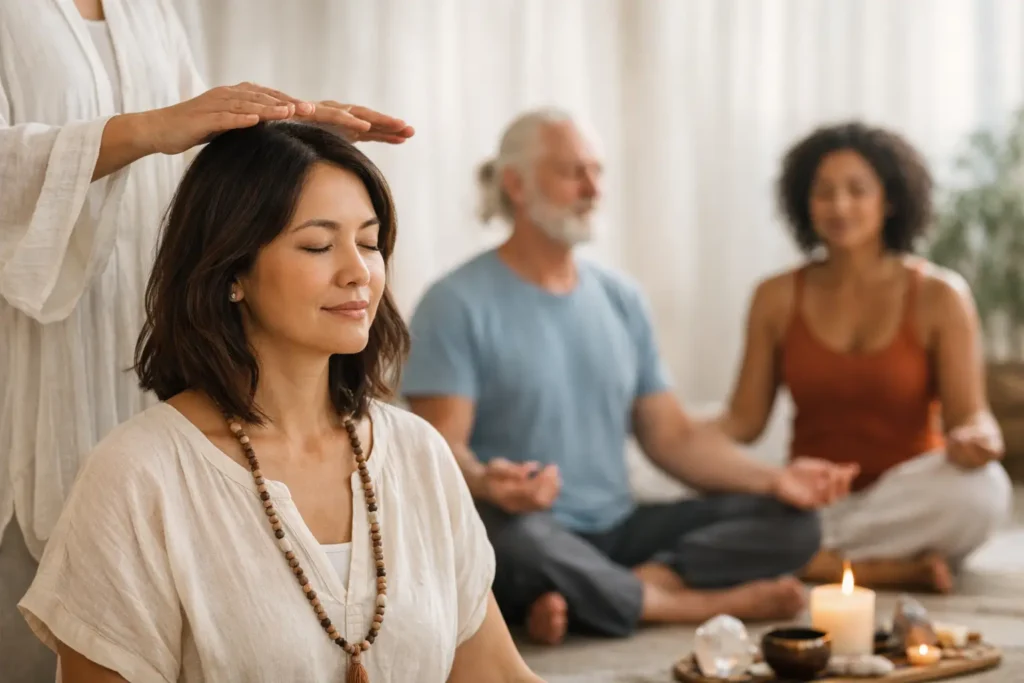
This is where Reiki becomes personal, because the experience is often easier to feel than to explain. During a session, the practitioner places their hands lightly on or just above specific areas of the body. The aim is not to “fix” you, but to create a safe, therapeutic environment where your nervous system can settle and your energy can rebalance.
People often describe warmth, tingling, emotional release, heaviness leaving the body, or a profound sense of peace. Others feel very little during the treatment itself and only notice afterwards that they are sleeping better, coping more calmly, or feeling less emotionally reactive. There is no single right response.
From a holistic perspective, Reiki supports the body’s own capacity for healing by encouraging relaxation and energetic flow. From a more practical perspective, it can be understood as a treatment that helps interrupt stress patterns. When the body shifts out of constant strain, healing often has more room to happen.
That does not mean Reiki is a cure-all, and it should not replace medical care when medical support is needed. It works best as a complementary therapy, especially for people who want to care for their wellbeing in a more rounded, natural and emotionally supportive way.
What happens during a Reiki session?
One of the reasons Reiki feels so accessible is that the treatment itself is simple. You remain fully clothed and usually lie on a treatment couch in a quiet, comfortable room. The atmosphere is calm and private, with the focus on helping you feel safe enough to let go.
A certified practitioner will guide the session, often beginning with a short conversation about how you have been feeling and what support you are seeking. That might be stress relief, emotional balance, support during a demanding period, or simply a desire to reconnect with yourself.
The treatment then unfolds gently. Hand positions may be used around the head, shoulders, torso, arms, legs and feet, depending on the practitioner’s approach. Some sessions include no touch at all, which can be reassuring for clients who prefer personal space.
Afterwards, many people feel deeply relaxed, clearer in their thinking, or pleasantly tired. Some notice an emotional shift. Others simply feel more themselves. It can help to drink water, rest where possible, and allow the body time to process the experience.
Who might benefit from Reiki healing?
Reiki often appeals to people who are carrying more than they can comfortably hold. That may look like workplace stress, family pressures, burnout, poor sleep, emotional overwhelm, grief, or the sense that you have been running on empty for too long.
It can also support people who are already on a wellbeing journey and want a treatment that includes mind, body and spirit rather than separating them. For clients receiving massage, reflexology, meditation support or emotional wellbeing care, Reiki can sit beautifully alongside those therapies.
Some people seek Reiki for spiritual reasons, while others come purely for relaxation. Neither approach is better than the other. What matters is whether the treatment helps you feel more balanced, more peaceful and more supported in your own healing process.
For those recovering from periods of anxiety or emotional exhaustion, Reiki may offer a pause from constant mental noise. For people coping with physical tension, it can complement hands-on therapies by bringing a different layer of calm. And for aspiring practitioners, learning Reiki can become not only a skill, but a pathway into deeper personal growth and professional development.
What healing Reiki is not
Because Reiki is sometimes misunderstood, clear expectations matter. Reiki is not a replacement for diagnosis, medical treatment, medication or emergency care. If you are dealing with a serious physical or mental health concern, professional medical guidance should always come first.
It is also not a performance. You do not need to feel dramatic sensations for it to be working, and you do not need to be highly spiritual to benefit. Some sessions feel powerful and emotional. Others feel quiet and subtle. It depends on the person, the moment and what your system is ready for.
A good practitioner will never make unrealistic claims. The most trustworthy Reiki care is grounded, compassionate and clear about boundaries. That balance of warmth and professionalism is important, especially if you are new to holistic therapies.
Why people return to Reiki
There is a reason many clients do not book Reiki just once. In a world that often rewards overdoing and overgiving, Reiki creates space to receive. That alone can be deeply healing.
Regular sessions may help people maintain emotional steadiness, improve their sense of inner calm, and feel more connected to themselves. For some, Reiki becomes part of ongoing self-care. For others, it is something they return to during demanding seasons, after emotional upheaval, or when they need support that feels gentle but meaningful.
At Birmingham Holistic, this is why Reiki continues to resonate with so many clients. It meets people where they are, whether they arrive feeling stressed, spiritually disconnected, physically drained or simply in need of peace.
Is Reiki right for you?
If you are drawn to therapies that feel nurturing, non-invasive and centred on the whole person, Reiki may be worth exploring. It tends to suit people who want more than temporary relief. They want space to exhale, to rebalance, and to feel genuinely cared for.
At the same time, it helps to be honest about what you need. If you want a treatment that directly works into muscles, massage may be more appropriate. If you need structured support for injury recovery, physiotherapy may be the better fit. Reiki offers something different – less mechanical, more restorative, and often deeply settling on an emotional level.
Sometimes the best approach is integrative. A combination of therapies can support different parts of your wellbeing, especially when stress has become both physical and emotional.
If you have been wondering what is healing Reiki, the simplest answer is this: it is a gentle practice that supports balance, calm and healing by helping the body and mind move out of stress and back towards harmony. You do not need to have all the answers before booking your first session. Sometimes healing begins with giving yourself permission to rest.